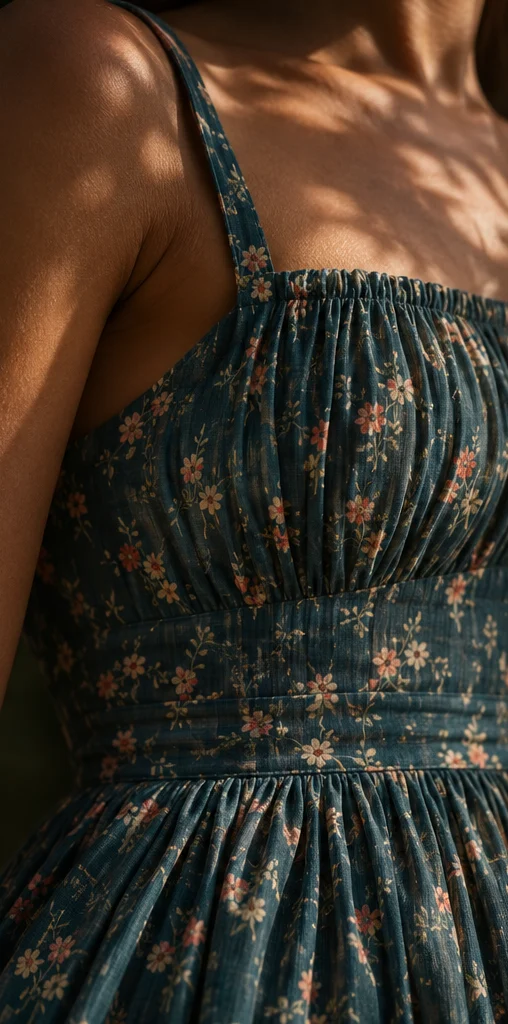
The garden sundress
Pose the fitted body
Full-size pattern ↓FrankenTextiles / Construction studies
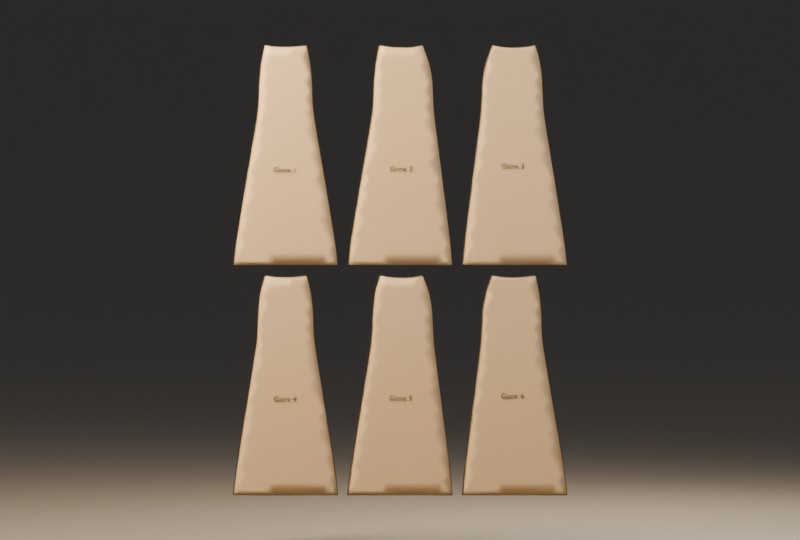
Six gores · 68 cm form
Each gore widens from the waist to the hem. Joined edge to edge, the six pieces give the hem 168 cm of sweep.
The drape room
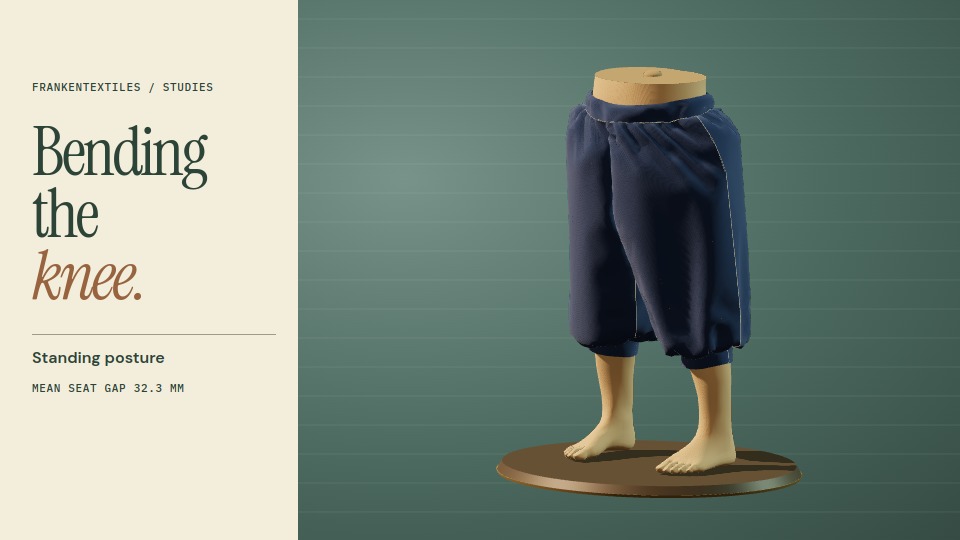
Raise the arms to see where the bolero pulls closer. Choose the coupled outfit to watch the jacket hem and trouser waistband settle against each other.

Each combination replays a separate FrankenTextiles run with the same pattern and fabric. The first 88 frames illustrate assembly. The final 48 show native sewing and gravity steps on the fitted synthetic 92 cm form. The readings above describe the endpoint. The corded edge, the weave and the 2 mm thickness are drawn for display, and the surface between solver points is smoothed. The form carries no skin or face.
The mean gap averages the distance at the chest ring. Edge strain is the change in edge length over the whole garment. This run’s endpoint range is -4.36% to +4.06%. Contact shows the magnitude of the body’s barrier force at each welded cloth vertex, in newtons. Physical fit requires a sewn sample.
What FrankenTextiles is
Sewing patterns that demonstrably sew together and fit a specific body, with the files people and machines need to make them.
An image model will happily draw a convincing pattern sheet. One that was audited had side seams 8% apart and a sleeve cap too short to set into its armhole. A pattern has to be checked as geometry, and then on a body, before anyone cuts cloth. FrankenTextiles does both, in Rust, on your own device.
From a tape measure to cut cloth
Five steps, and each one shows its work. Read how it works
Start with what you know about the wearer: a few tape measurements, a photograph with a sheet of paper for scale, or only an age and a height. Each value keeps its uncertainty and where it came from.
GivesMeasurements with a source
Measure from a photoA body model that covers newborn to adult is fitted to those measurements, read the way a tape reads them. Anything it fills in without a measurement is labelled as the model’s estimate.
GivesA fitted body and what it could not match
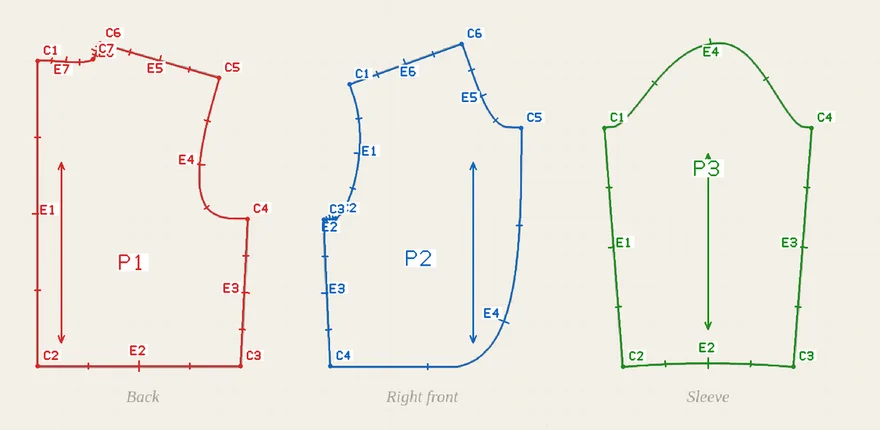
Change the figureDraft a garment to the measurements, alter a pattern you already have, or trace a drawn or scanned sheet. Every seam is walked and every fit point is checked on the flat pattern.
GivesA pattern whose seams match
Draft a boleroA cloth solver sews the pieces together around the fitted body, with contact and friction. It reports whether the seams close, where the cloth runs tight, and whether an elastic holds.
GivesA draped garment and its flags
Watch it sewPrint tiled pages at home, send one large sheet to a copy shop, or hand a cutting service its DXF. Plotters, cutting machines and embroidery machines each get their own file, and every file is checked before it is written.
GivesFiles for people and machines
Lay out the rollNothing computed can show that a garment fits a person. Sew a test garment in cheap cloth before you cut the good fabric.
Interactive garments
Take a garment off the rail. Turn it around, change the figure, or look beneath a layer.
The worktable
Change a parameter. Inspect the result. Take the actual pattern, cutting marker, or stitch file with you.
Drafting and checking locally…
Material studies
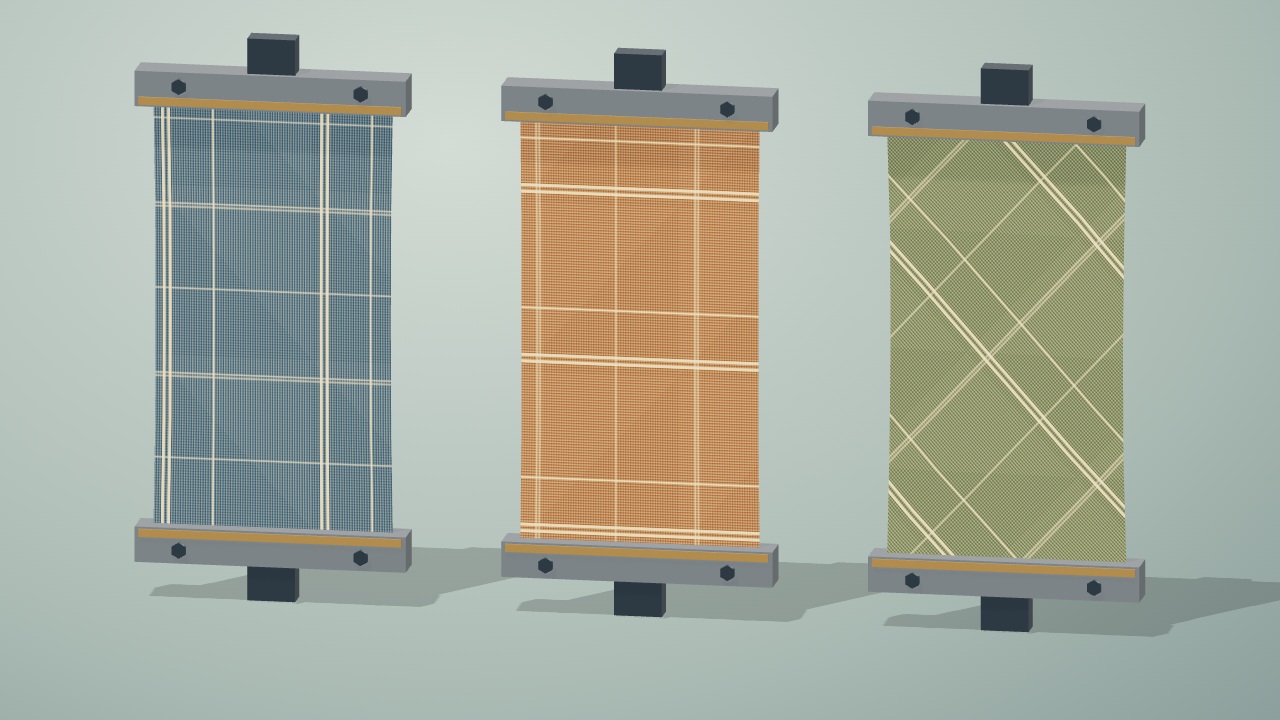
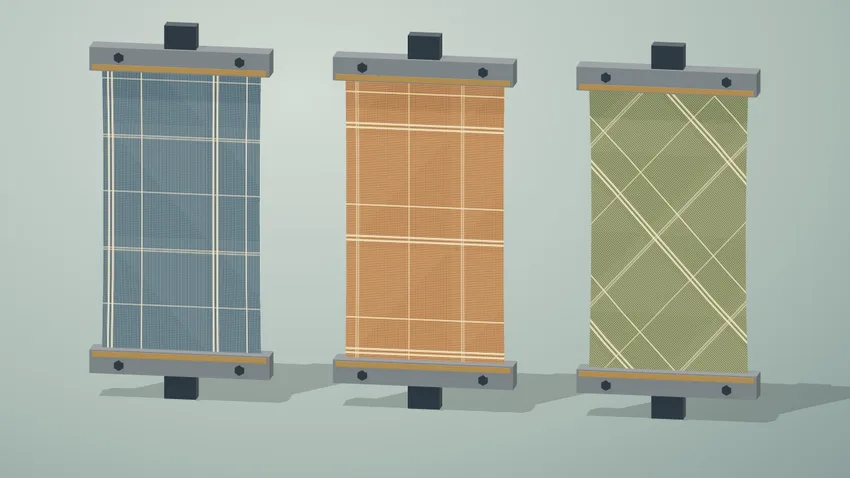
Two experiments from the Rust solver. Move the grips and see what changes in the cloth.
Cloth in three dimensions
Raster tracing
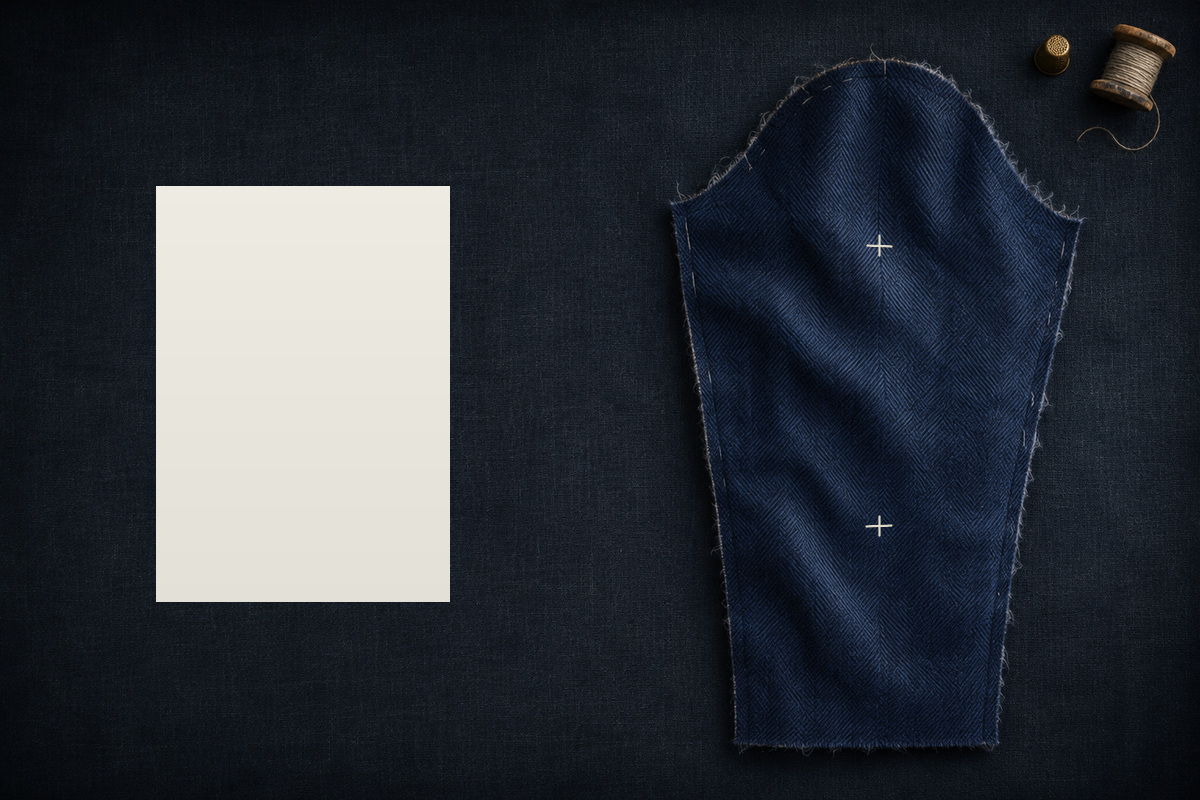
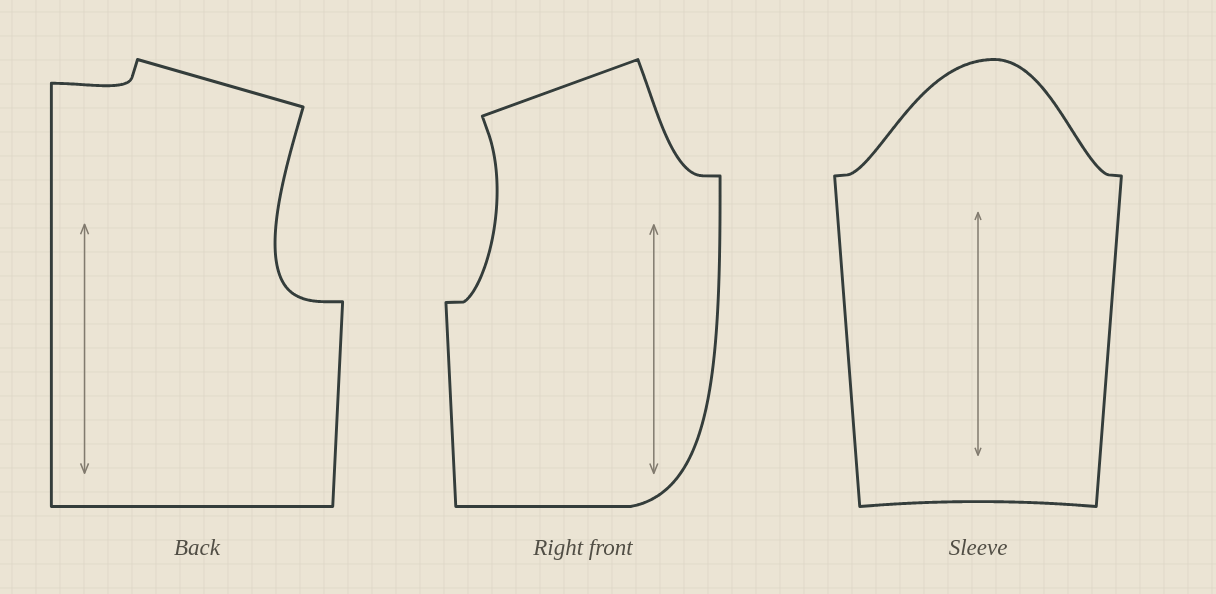
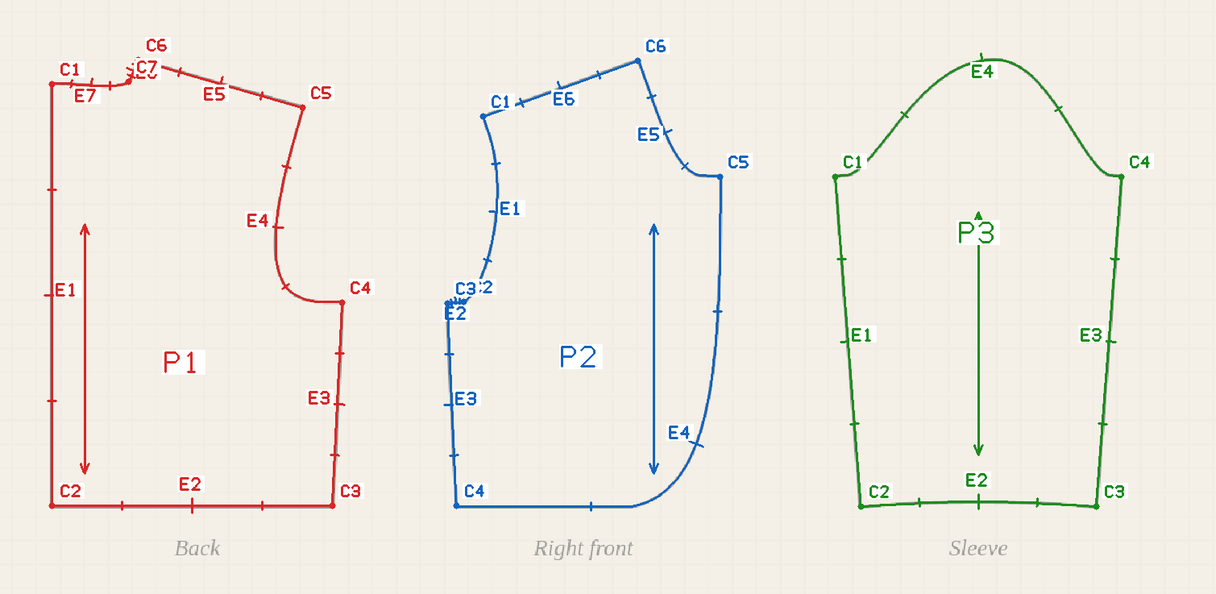
Slide across this synthetic bolero sheet to see the piece outlines, corners, and grain directions recovered by the Rust tracer.
What it writes
A single command exports them all. For the 92 cm bolero it writes 25 files and passes 183 of 183 checks.
Print at home at 100% and check the two calibration squares.
Home printerOne large sheet with every piece at full scale.
Copy shopLight and dark versions for projecting onto the cloth.
ProjectorThe whole pattern in millimetres, for editing or archiving.
Vector editorThe interchange files that cutting services and pattern CAD expect.
Cutting servicePen-plotter instructions for the cut and stitch lines.
PlotterSized for a desktop cutting machine, with a report of what fits.
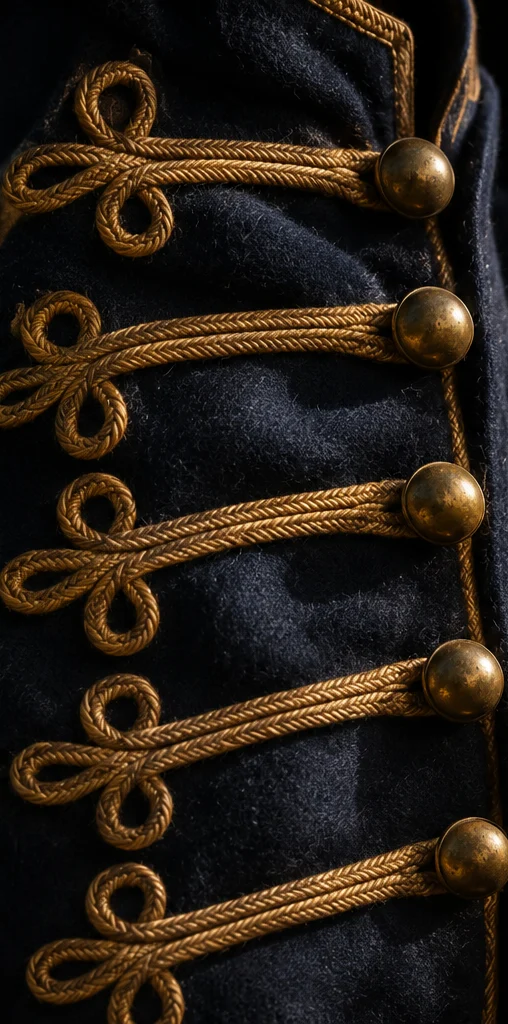
Cutting machineThe braid path, with a stop where you lay the cord.
Embroidery machinePanels and stitches for exchange with GarmentCode tools.
Other softwareRun FrankenTextiles in your browser
Each opens with a working example. Load your own files when you’re ready. Everything runs on your device.
What a result means
They are never averaged into one score. A drape with no warning flags is a prediction, not a fit.
A ported part behaves like the reference it replaces.
Established byFixtures captured from the pinned reference, never regenerated from the port.
The solver behaves like cloth where the answer is known.
Established byKnown-answer tests: a ring on a cylinder, a ring on a cone, a cantilever strip.
A garment fits a real person.
Established byA muslin or a photograph of the garment worn. Nothing computed does.
A workload runs in a stated time.
Established byA benchmark that names its machine, its inputs and its spread.
Start here
The workbenches need nothing installed and open with a working example. The command-line tool runs the same Rust code and writes every file.
# reference measurements from population data
ftx measure reference --stature-mm 920 --age-months 30 --out m.json

# draft the bolero, then write every file
ftx draft zouave_bolero --measurements m.json --out bolero
ftx export all bolero/pattern.json --out bolero/files
PASS: 183/183 checks